
Federal prosecutors in New York unsealed a major indictment on Wednesday, charging the Governor of Sinaloa and nine other current and former Mexican officials with drug trafficking and weapons offenses. The defendants are accused of using their positions of trust to protect the Sinaloa Cartel, specifically the “Los Chapitos” faction, and facilitating the massive importation of fentanyl, heroin, and cocaine into the United States.
High-Level Corruption Allegations
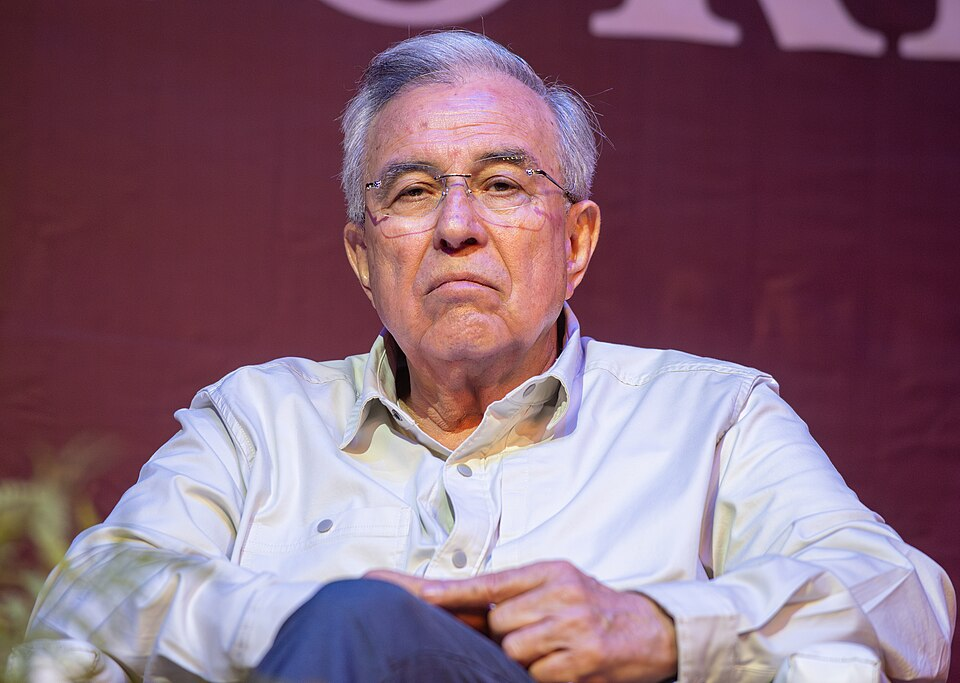
The highest-profile figure named is Rubén Rocha Moya, 76, the current Governor of Sinaloa and a member of Mexico’s ruling Morena party. The charges against him include narcotics importation conspiracy and the possession of machine guns and destructive devices. If convicted, Rocha faces a mandatory minimum of 40 years in prison.
Rocha has “categorically and absolutely” rejected the allegations, labeling them a “perverse strategy” and an attack on Mexican national sovereignty. However, the indictment alleges that Rocha and other officials were on the cartel’s payroll, enabling a pipeline of deadly drugs that has ravaged communities across the US. (BBC, NBC News)
Political Fallout for President Sheinbaum
The indictment poses a significant challenge for Mexican President Claudia Sheinbaum. Several of the charged officials, including Rocha and Senator Enrique Cazarez, are members of her Morena party. This creates a diplomatic friction point as Sheinbaum seeks to manage mounting pressure from the Trump administration to crack down on organized crime.
While the US has issued multiple extradition requests, the Mexican government has not yet confirmed if it will comply. Sheinbaum previously stated that any US investigation against Mexican citizens must have evidence reviewed by Mexico’s Attorney General. (Wall Street Journal, CNN)
Connections to “Los Chapitos”
Authorities allege the defendants were closely aligned with the sons of Joaquín “El Chapo” Guzmán. The indictment suggests these officials participated in the cartel’s campaigns of violence and retribution. This case follows the 2023 conviction of Genaro García Luna, a former Mexican security secretary who received 38 years in prison for similar cartel-linked bribery.
US Ambassador Ronald Johnson stated that this action is part of a broader anti-corruption campaign targeting officials who enable organized crime, noting that such corruption “erodes the trust upon which markets depend.” (NBC News, Fortune)
Why This Matters to You
This indictment strikes at the heart of the fentanyl crisis. When high-ranking officials protect cartel pipelines, it directly increases the volume of deadly synthetic opioids reaching your local community. If you have seen a rise in drug-related crime or overdoses in your neighborhood, these legal actions represent an attempt to cut off the supply at its most protected source—the government offices that allow it to flow.
For your wallet, systemic corruption and the “tax” imposed by cartels on cross-border trade can distort the prices of imported goods and services. When law enforcement and government officials are compromised, it weakens the stability of the markets and can lead to increased costs for consumers as businesses navigate more volatile and dangerous environments.
On a personal level, this story highlights a major shift in international relations that could affect travel and security. As the US and Mexico navigate these extradition requests and corruption charges, diplomatic tensions could lead to stricter border controls or travel advisories. Following how the Sheinbaum administration responds will tell you a lot about the future safety and transparency of the neighboring regions many Americans visit or conduct business with.
-Elijah Iraheta, Editor in Chief, ASC News
Photo: EneasMx – Creative Commons Attribution 4.0