
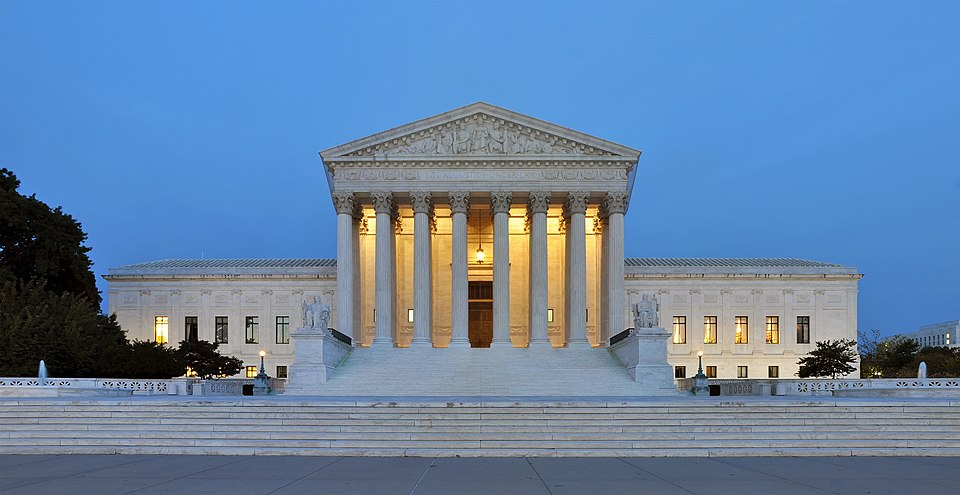

In a 6-3 decision on Wednesday, the Supreme Court ruled that Louisiana’s congressional map—which featured two majority-Black districts—is an unconstitutional racial gerrymander. The ruling marks a significant narrowing of the Voting Rights Act (VRA), specifically Section 2, which has historically been used to ensure minority groups have a fair opportunity to elect candidates of their choice.
The Ruling and the New Standard
Writing for the conservative majority, Justice Samuel Alito stated that Louisiana relied too heavily on race when drawing its boundaries. The Court found that the state’s desire to comply with the VRA did not justify the use of race in creating the “SB8” map.
Crucially, the decision raises the bar for future legal challenges to voting maps. Alito wrote that Section 2 now only applies when evidence supports a “strong inference” that a state intentionally diluted minority voting power. This shifts the focus from the effect of a map to the intent of the lawmakers who drew it. (Fortune, NBC News)
In a sharp dissent, Justice Elena Kagan argued that the majority “eviscerates” the VRA. She warned that proving “discriminatory motive” is nearly impossible, potentially allowing states to systematically dilute minority voting power without legal consequence. (CNN)
Political Implications
The timing of the decision is critical, appearing just months before the November midterm elections. However, with Louisiana’s primary elections set for May 16 and early voting starting this Saturday, it is unlikely the map can be redrawn in time for this cycle.
The legal battle over this map began in 2022 after the 2020 Census. The original GOP-drawn map had only one majority-Black district, despite Black residents making up nearly one-third of Louisiana’s population. A federal judge initially ordered a second district to be created, which led to the election of Democrat Cleo Fields in 2024. The Supreme Court’s ruling now invalidates that configuration. (Fortune, Wall Street Journal)
Reactions
- Republicans: President Trump called the ruling a “BIG WIN,” and Louisiana Attorney General Liz Murrill described it as a “seismic decision” that ends federal coercion regarding racially discriminatory maps.
- The White House: Spokeswoman Abigail Jackson called the decision a “complete and total victory,” stating that skin color should not dictate congressional districts.
- Democrats and Civil Rights Groups: DNC Chairman Ken Martin called it a “gut punch,” while NAACP President Derrick Johnson labeled the ruling a “devastating blow” that silences entire communities. (NBC News, CNN)
Why This Matters to You
Redistricting determines who represents you in Congress and, by extension, who controls the “power of the purse.” The representatives elected under these maps decide on federal spending, tax codes, and local infrastructure projects. When a map is struck down or redrawn, it can change whether your representative prioritizes the economic interests of your specific neighborhood or shifts focus to a different constituency.
This ruling changes how communities are grouped together. If your community is “split” between districts or merged into a larger one, your collective voice on local issues—like school funding or regional transit—can be diluted. For minority communities in particular, this decision may reduce the likelihood of having a representative who shares their specific lived experiences and priorities.
At its core, this is about the weight of your individual vote. The Supreme Court has made it harder to challenge maps that might be unfair. This means you may have less legal recourse if you feel your voting power is being manipulated for political gain. It places a higher premium on participating in every election, as the legal “safety net” for fair representation has been significantly tightened.
-Elijah Iraheta, Editor in Chief, ASC News
Photo: Joe Ravi – Creative Commons Attribution-Share Alike 3.0