
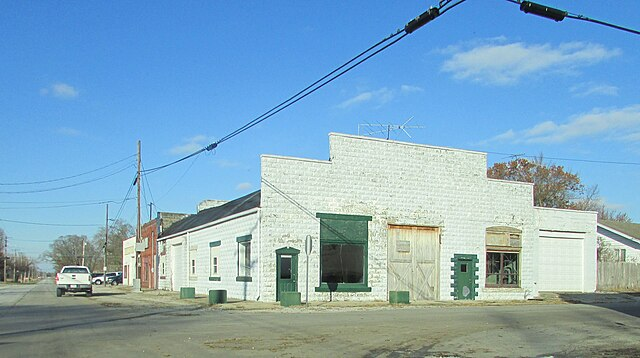
A powerful tornado outbreak struck the Midwest on Tuesday night and Wednesday, killing at least two people in Lake Village, Indiana and causing extensive damage across northern Illinois and northwestern Indiana. More than 77 million people from the Midwest to the southern Plains remain under severe weather threats on Wednesday as a second round of storms moves through the region.
Lake Village, Indiana
Lake Village, a small community in Newton County in northwestern Indiana, took a direct hit from a confirmed tornado Tuesday night. At least two people were killed, confirmed Wednesday morning by a Lake Township Fire Department spokeswoman. Several others were injured. Fire Chief Rob Churchill described the scene as “total devastation,” saying houses had collapsed and people were trapped inside. More than 250 first responders from neighboring counties rushed into Lake Village overnight to begin search and rescue operations, working in the dark and rain with downed power lines across roughly 70 poles throughout the county. Emergency shelter was set up at North Newton High School for displaced residents. Two employees were rescued uninjured from a destroyed Family Dollar store. Floodwaters also swept a car off a road in nearby Shoals. The driver remains missing. A passenger survived by clinging to a tree. (Fox Weather, ABC7 Chicago, Spectrum News)
Kankakee County, Illinois
In Kankakee County, about 57 miles south of Chicago, a tornado touched down near the county fairgrounds before moving northeast through the village of Aroma Park, where it caused extensive structural damage including collapsed walls and partially destroyed roofs. Grapefruit-sized hail and winds between 67 and 77 mph were recorded throughout the county. At least seven injuries were reported, with more still being assessed. Kankakee County declared a state of emergency. The local school district cancelled classes Wednesday. Crews were unable to fully assess damage Tuesday night due to downed power lines. Illinois Governor JB Pritzker said he had been briefed on the damage and pledged state support for recovery. (Fox Weather, ABC7 Chicago)
Bob Wehrle, 60, of Kankakee, described taking shelter in his basement utility room after seeing debris flying through the air. “Next thing I know, my kitchen is falling in on me. The house is falling in, and I’m looking at the sky,” he told NBC News. It took neighbors and family members about an hour to dig him out. He was not seriously injured.
The Scale of the Outbreak
The parent thunderstorm system that produced Tuesday’s tornadoes persisted for more than seven hours along a 200-mile path. The National Weather Service confirmed eight tornado reports between Illinois and Indiana on Tuesday, plus two in Texas. Confirmed tornadoes were also reported in Iowa and Oklahoma. This is the most widespread and impactful severe weather outbreak of the year so far, according to AccuWeather. AccuWeather senior meteorologist Courtney Travis attributed the conditions to strong upper-level winds, abundant Gulf moisture and sharp temperature contrasts. (NWS Storm Prediction Center, AccuWeather, Fox Weather)
More than 35,000 customers were without power across the Midwest and Great Lakes region Wednesday morning. A second round of severe storms was moving through the region Wednesday, with tornado watches in effect across Indiana, northern Kentucky and western Ohio, including Indianapolis, Louisville and Cincinnati, until noon ET. Approximately 67 million people remain under severe storm threat from northern Pennsylvania to the Gulf Coast. (PowerOutage.us, NWS)
The Bigger Weather Picture
Tuesday also brought extreme weather further east. Central Park in New York City broke its daily high temperature record, reaching 80 degrees, melting away ice and snow left over from last week’s blizzard. The sharp weather contrast across the country reflects an unusually active early spring pattern. (NWS)
Why This Matters to You
Tornado season is arriving earlier and hitting harder. This is already being called the most significant severe weather outbreak of 2026, and it comes just days after a separate tornado outbreak swept through the Heartland. For residents across the Midwest and southern Plains, the message from forecasters is consistent: have a shelter plan ready and take every warning seriously.
For the broader country, extreme weather events like this one carry a growing economic toll in property damage, displacement and recovery costs. It is worth thinking about: With tornado outbreaks striking earlier in the year and affecting tens of millions of people at a time, are communities investing adequately in early warning systems and storm-resistant construction? With a driver still missing after floodwaters swept a car off a road in Indiana, how quickly can emergency resources be deployed when multiple communities are hit simultaneously? And with 35,000 households already without power, how prepared are utility companies and local governments for the remainder of what forecasters are calling an unusually active storm season?

