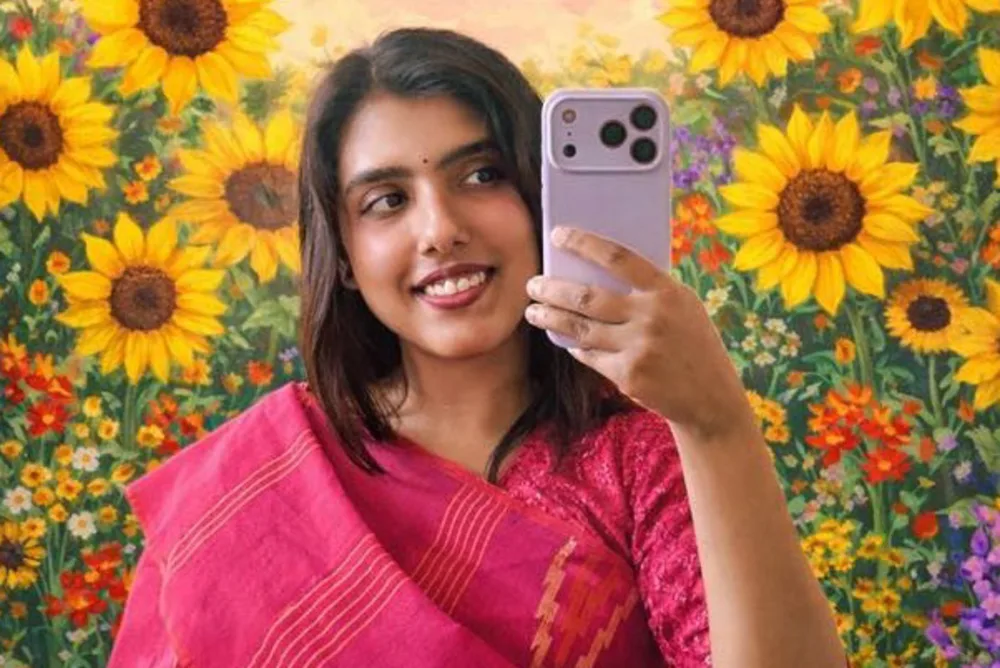

The Hillsborough County Sheriff’s Office confirmed Friday that human remains discovered Sunday during an ongoing search belong to Nahida Bristy, a 27-year-old doctoral student at the University of South Florida. The confirmation brings a somber conclusion to a search that began after Bristy and fellow USF doctoral student Zamil Limon, also 27, were reported missing in mid-April.
Sheriff Chad Chronister announced the identification at a news conference, stating that DNA analysis, dental records, and clothing visible in prior surveillance footage were all used to confirm Bristy’s identity. “We have located Nahida Bristy. We have contacted her family. We are now actively working to release both bodies for religious reasons back to the families who live in Bangladesh,” Chronister said.
Bristy’s remains were found after two kayakers fishing in the area noticed a submerged bag in the water. One of the fishermen’s lines had snagged on the bag, and upon investigating further, he encountered what appeared to be human remains and immediately contacted law enforcement. Limon’s remains had been discovered the previous week near the Howard Frankland Bridge in Tampa.
Hisham Abugharbieh, 26, a former USF student and Limon’s roommate, has been charged with two counts of first-degree murder in connection with both deaths, along with additional charges including two counts of storing remains in unapproved conditions, two counts of failure to report a death, battery, false imprisonment, and tampering with evidence. He is currently being held without bond at Falkenburg Road Jail in Tampa.
According to court filings, Abugharbieh gave Limon and Bristy a ride from Tampa to Clearwater on April 16 — the last day the two were seen alive. He initially denied having the pair in his vehicle, but changed his account after investigators confronted him with phone location data placing Limon in Clearwater, consistent with Abugharbieh’s own vehicle location at the time. He subsequently stated he had dropped them off there at Limon’s request.
That same evening, Abugharbieh purchased trash bags and cleaning supplies, according to investigators. The following day, location data obtained through a search warrant showed he drove to the Howard Frankland Bridge and stopped along it — the area where Limon’s remains were later found. A roommate told investigators he observed Abugharbieh moving cardboard boxes to a dumpster on April 17. DNA testing on a kitchen mat in the apartment matched Bristy’s profile, and items belonging to Limon, including a student ID and credit cards, were recovered from the dumpster.
Prosecutors also noted that Abugharbieh had queried an AI chatbot about disposing of a person in a dumpster on April 13 — three days before Limon and Bristy were last seen. The Florida Attorney General’s Office has said it is expanding an ongoing investigation into the company behind that chatbot following a separate incident at Florida State University.
Abugharbieh was arrested on April 24 following a brief standoff at a Tampa residence. Court records show he has a criminal history dating back to 2018 that includes charges of battery, burglary, and trespassing.
An attorney for Abugharbieh had not responded to a request for comment at the time of publication. As with all individuals charged with a crime, Abugharbieh is presumed innocent unless and until proven guilty in a court of law.
Why This Matters to You
For your community, this case raises important questions about safety on university campuses and in student housing. Both victims were international doctoral students far from their home country of Bangladesh, relying on the people immediately around them — classmates, roommates, peers — for their support networks. Universities across the country are being asked to examine how they support the safety and wellbeing of international students, who may be more isolated and have fewer local connections to turn to in difficult situations.
On a broader level, the allegation that a suspect used an AI tool to research methods of concealing a crime before the act occurred has drawn renewed attention from lawmakers and law enforcement about how these technologies can be misused. Florida’s attorney general has already moved to expand an investigation into the company involved. This is a developing legal and policy conversation that could affect how AI platforms are regulated and what responsibilities technology companies bear when their tools are used in connection with criminal activity.
For families with students living away from home, this case is a painful reminder of the importance of maintaining open lines of communication and awareness of the people in your student’s immediate environment. It also underscores the critical role that everyday citizens play in public safety — in this instance, it was two fishermen who made the discovery that allowed investigators to bring answers to a grieving family.
-Elijah Iraheta, Editor-in-Chief, ASC News
Photo: University of South Florida Police Dept.