
The Pentagon announced Friday that approximately 5,000 U.S. troops will be withdrawn from Germany over the next six to twelve months, a decision that has drawn alarm from NATO allies, bipartisan concern in Washington, and sharp criticism from European leaders already anxious about the continent’s long-term security.
Defense Secretary Pete Hegseth ordered the withdrawal following what the Pentagon described as a thorough review of U.S. force posture in Europe, citing theater requirements and conditions on the ground. A senior Pentagon official said the drawdown would bring U.S. troop levels in Europe back to roughly pre-2022 levels, before Russia’s invasion of Ukraine triggered a military buildup under then-President Biden. Military Times, CBS News
The decision comes amid a public rift between President Trump and German Chancellor Friedrich Merz over the U.S. war in Iran. Trump had threatened a reduction in forces earlier in the week after Merz publicly questioned Washington’s exit strategy in the Middle East, prompting a senior Pentagon official to describe the German chancellor’s remarks as “inappropriate and unhelpful.” German military officials told Reuters the announcement came as a surprise, given what they described as constructive meetings at the Pentagon only hours earlier. CBS News
Beyond the troop reduction, the announcement included the cancellation of a Biden-era plan to deploy a long-range fires battalion — equipped with Tomahawk missiles — to Germany. Defense analysts say that cancellation may carry greater strategic consequences than the troop numbers alone. The U.S. holds what one European defense expert described as a “factual monopoly inside NATO” on long-range fires capability, making the cancellation operationally more serious than the reduction in personnel. foxla
The announcement drew immediate concern from senior Republican lawmakers. Senate Armed Services Committee Chair Roger Wicker and House Armed Services Committee Chair Mike Rogers issued a joint statement saying they were “very concerned,” arguing the troops should not leave Europe but rather be repositioned further east — closer to NATO’s border with Russia — rather than withdrawn from the continent entirely.
Polish Prime Minister Donald Tusk, whose country sits on NATO’s eastern flank and has sought continued U.S. security assurances amid the ongoing war in Ukraine, warned that the internal fracturing of the transatlantic alliance posed a greater threat than any external adversary. German Defence Minister Boris Pistorius acknowledged the drawdown was anticipated and called on European nations to accelerate their own defense development in response.
The Pentagon has not specified which bases in Germany will be affected by the drawdown, nor whether the departing troops will return to the United States or be redeployed elsewhere within Europe or other theaters. NATO said it was working with Washington to understand the full scope of the decision. CBS News
The troop announcement arrived alongside a separate move by Trump to raise tariffs on European Union automobile imports to 25%, a combination that a senior CDU foreign policy official described as appearing less like a coherent strategic posture and more like political frustration responding to domestic and international pressures.
Why This Matters to You
For your wallet, a reduction of U.S. troops in Germany would be the most significant shift in European security since the end of the Cold War. Germany is a major trade partner for the U.S., and a breakdown in the military alliance could lead to trade friction, impacting the cost of everything from German-made vehicles to specialized industrial machinery. The simultaneous increase in auto tariffs announced this weekend compounds that risk directly, with analysts estimating the new duties could cost the German economy nearly $18 billion in output — costs that often find their way back to American consumers in the form of higher prices on imported goods.
In your community, the U.S. military presence in Germany is a massive logistical operation that supports thousands of defense-related jobs and businesses back home. If bases like Ramstein are downsized, the ripple effect could hit defense contractors and local economies in the U.S. that provide the equipment, technology, and services required to maintain those overseas garrisons. For military families, the uncertainty over where these 5,000 service members will be redeployed — back to the U.S. or elsewhere — has direct implications for assignments, housing, and family planning.
On a personal level, the cancellation of the long-range missile deployment is the detail in this story that deserves the most attention. Experts note that the U.S. currently holds a near-exclusive capability within NATO for that type of deterrence. Removing it from Europe before allies can develop comparable systems of their own creates a window of reduced deterrence against Russia — at a moment when the war in Ukraine remains unresolved. A less stable Europe affects the security environment that underpins global trade, travel, and investment for everyone.
-Elijah Iraheta, Editor-in-Chief, ASC News
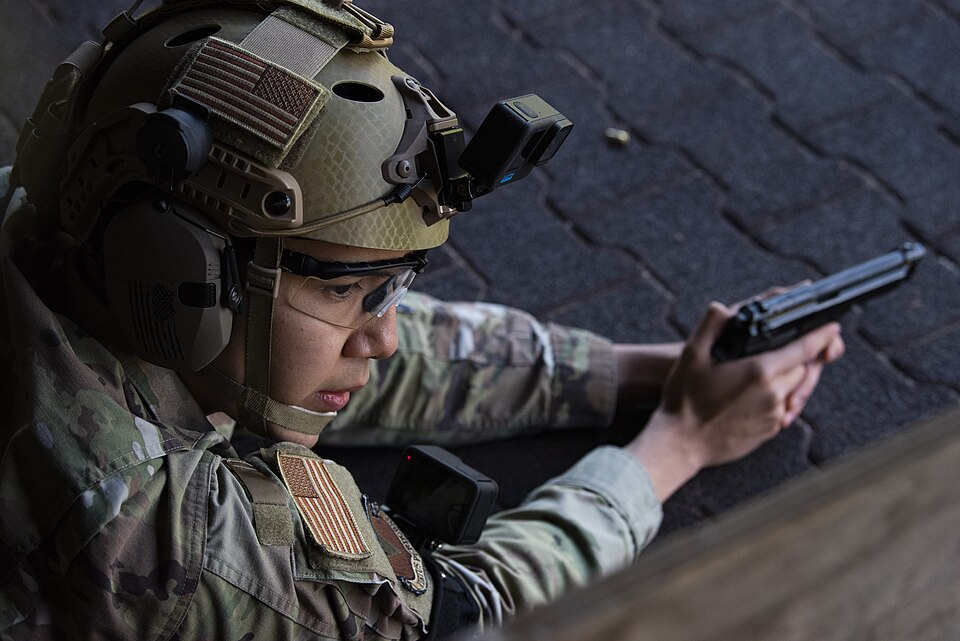
Photo: U.S. Air Force photo by Staff Sgt. Gabrielle Spalding