
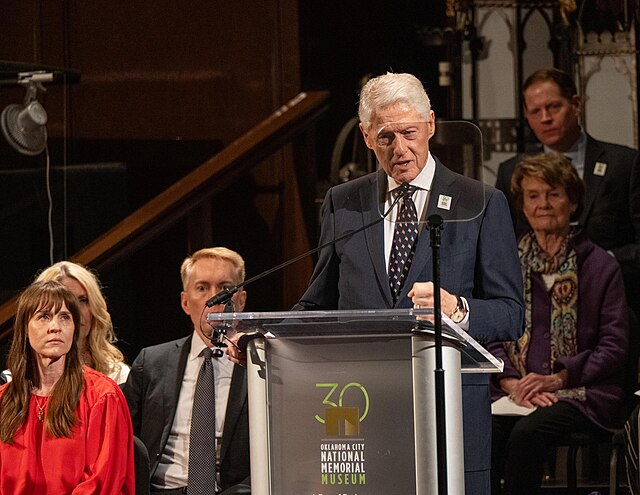
Former President Bill Clinton is set to give his deposition to the House Oversight Committee on Friday as part of its investigation into ties to convicted sex offender Jeffrey Epstein. The deposition comes one day after Hillary Clinton spent a full day testifying before the same committee, during which she called the proceedings partisan political theatre and an insult to the American people. She maintained throughout that she had never met Epstein and said she had no information about him or his activities.
Bill Clinton has acknowledged flying on Epstein’s private jet multiple times in the early 2000s but has said he never visited Epstein’s island. White House visitor logs cited in news reports show Epstein visited the White House at least 17 times during the early years of Clinton’s presidency. Clinton said he cut ties with Epstein around 2005, before Epstein pleaded guilty to solicitation of a minor in Florida in 2006. A photo from the recently released Epstein files also shows Clinton in a hot tub with Epstein and a woman whose identity is redacted. Clinton has not been accused of any wrongdoing in connection with Epstein.
The Clintons were subpoenaed in August and initially refused to appear, agreeing only after Republicans threatened contempt of Congress charges. Both pushed for the depositions to be held publicly, with Bill Clinton saying a closed-door process would amount to a kangaroo court. Committee chairman James Comer denied that request. The proceedings are being conducted behind closed doors with video expected to be released at a later date. Thursday’s session was briefly disrupted after Rep. Lauren Boebert leaked an image of Hillary Clinton mid-testimony. Comer said Friday’s session with Bill Clinton would be even longer than Thursday’s.
Why This Matters to You:
This investigation goes beyond the Clintons. At its core it is about whether powerful people across politics, finance and public life were able to shield themselves from accountability for decades, and whether the justice system treated Epstein’s victims fairly. The outcome of these depositions could influence new legislation around sex trafficking enforcement, non-prosecution agreements and ethical standards for public officials. It also raises broader questions worth thinking about: Should congressional depositions of public figures always be held in public? How do we weigh political motivation against genuine accountability? And what does it say about the justice system that Epstein’s full network of associates is only being scrutinised years after his death?

