
Oil prices surged above $100 a barrel again on Thursday as the International Energy Agency declared the Iran war was creating the largest oil supply disruption in the history of global energy markets. The announcement came one day after the IEA released a record 400 million barrels from strategic reserves, a move that failed to calm prices as Iran’s new supreme leader broke his silence and vowed to keep the Strait of Hormuz closed. Stocks fell sharply and mortgage rates hit their highest level since February.
The IEA’s Historic Warning
The IEA’s monthly oil market report, released Thursday, was unambiguous. “The war in the Middle East is creating the largest supply disruption in the history of the global oil market,” the agency wrote. Flows through the Strait of Hormuz have fallen from approximately 20 million barrels per day before the war to “a trickle.” Gulf countries have cut total oil production by at least 10 million barrels per day as storage fills up. Global oil supply is projected to fall by 8 million barrels per day in March alone, a volume roughly equal to the entire daily oil import needs of the United States. The IEA called its own reserve release a “stop-gap measure,” making clear it cannot substitute for a reopened strait. (IEA, Fortune, NBC News)
The scale of the disruption dwarfs all previous energy crises. “This absolutely dwarfs what we saw in the Russia-Ukraine crisis,” said Helima Croft, chief commodities strategist at RBC Capital Markets. “The Strait of Hormuz is the big one. It’s always what intelligence analysts and military planners have been concerned about.” Croft said the only solution is reopening the strait and providing confidence to shipping companies that tankers will not be attacked. (NBC News)
Khamenei Breaks Silence, Vows Hormuz Stay Closed
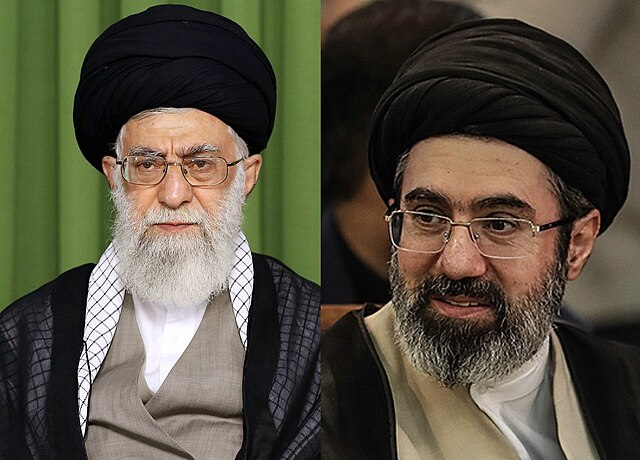
Iran’s new supreme leader Mojtaba Khamenei issued his first public statement since being named leader on Sunday. He did not speak publicly. Instead, a state television anchor read a written statement in which Khamenei vowed to keep the Strait of Hormuz closed, said Iran would continue attacks on Gulf neighbors and warned that Iran would open “other fronts” if the war continues. The IRGC separately warned that not “a litre of oil” would cross the Strait and threatened $200 per barrel oil if the US continued its strikes. (NBC News, Fortune)
Oil Prices and Markets
Brent crude rose 9% to above $100 per barrel. WTI climbed above $96. Both have now risen more than 40% since the war began on February 28. Oil prices have surged more than 17% since the IEA announced the reserve release on Wednesday, demonstrating the market’s conviction that reserves alone cannot solve the problem. Gas prices nationally stood at $3.59 per gallon Thursday, up nearly 70 cents since March 1. (GasBuddy, NBC News)
The US Energy Department confirmed it would release 172 million barrels as its share of the IEA total, representing 41% of its Strategic Petroleum Reserve. However, the release would not begin until the following week and would take 120 days to complete. At 1.4 million barrels per day, that covers just 15% of the supply lost from the Hormuz closure. The IEA release covers a third of member nations’ total emergency stockpiles. (CNBC)
The Dow fell 740 points. The S&P 500 lost 1.5%, the Nasdaq dropped 1.8% and the Russell 2000 plunged 2%. The 30-year fixed mortgage rate rose to 6.30%, its highest since early February, driven higher by rising government bond yields. (NBC News)
The Broader Energy Fallout
TotalEnergies, one of the world’s top 10 oil producers, said it was shutting down approximately 15% of its total output in Qatar, Iraq and UAE. Oil field services giant SLB said it was halting operations in several unspecified countries to protect personnel. Iraq suspended all oil terminal operations after vessels were attacked in its waters. An oil terminal in Oman was evacuated overnight. Saudi Arabia, Dubai and Kuwait all reported strikes and drone sightings. India announced new fuel rationing measures to prevent hoarding. (NBC News, Fortune)
Treasury Secretary Scott Bessent announced a temporary authorization allowing countries to purchase Russian oil currently stranded at sea, in an attempt to ease the global energy crunch. The move drew criticism from European allies. Trump separately suggested he was considering lifting requirements of the Jones Act, a century-old law requiring US domestic fuel to be transported on American-flagged ships. (NBC News, CNBC)
Why This Matters to You
The language the IEA used Thursday was not hyperbole. The largest supply disruption in the history of the global oil market means larger than the 1973 Arab oil embargo, larger than the Gulf War, larger than Russia’s invasion of Ukraine. The combination of a closed strait, targeted infrastructure attacks and countries rationing fuel is a set of conditions the modern energy system was not designed to sustain for weeks at a time.
For everyday Americans, gas is up 70 cents in two weeks and mortgage rates are rising. For businesses that depend on fuel, from airlines to trucking companies to farms, the margin squeeze is already significant. It is worth thinking about: If the IEA’s own reserve release is described as a stop-gap covering just 15% of the lost supply, what happens to energy markets if the Strait remains closed for another two to three weeks? With Russia now benefiting from sanctions relief and elevated oil prices simultaneously, is the energy crisis inadvertently strengthening one of Iran’s most important geopolitical backers? And with Iran’s new supreme leader making his first statement a vow to keep the Strait closed, what signal does that send about the likelihood of a near-term ceasefire?
-Elijah Iraheta, Editor in Chief, ASC News