
Israel claimed Tuesday that it had killed Ali Larijani, secretary of Iran’s Supreme National Security Council and the most senior Iranian official to be targeted since Supreme Leader Ali Khamenei was killed on the war’s first day. Israel also claimed the killing of Basij commander Gholamreza Soleimani. Iran has not confirmed or denied either death. The war has now entered its eighteenth day with no ceasefire in sight and a fresh Israeli ground invasion of southern Lebanon underway.
Who Larijani Was
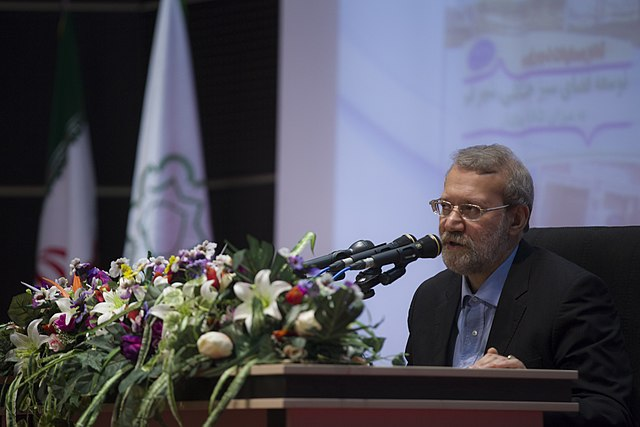
Larijani, 67, was one of the most consequential figures in Iranian politics for decades. Born in Najaf, Iraq, in 1958, he served as culture minister, head of state broadcasting and speaker of parliament for more than a decade. As chief nuclear negotiator, he played a central role in shaping Iran’s engagement with world powers and backed the 2015 nuclear deal. He was appointed secretary of the Supreme National Security Council in August 2025 following the June US-Israeli strikes on Iran. Since the February 28 attacks, he had effectively been directing Iran’s political and diplomatic war effort alongside Foreign Minister Abbas Araghchi. He was last seen publicly on March 13, taking part in the annual Quds Day rally in Tehran. (CNBC, The National, Al Jazeera)
Israeli Prime Minister Netanyahu’s office said Netanyahu had personally ordered the elimination of senior Iranian regime officials. Israeli Defense Minister Israel Katz said Larijani and Soleimani had “joined Khamenei and all the eliminated members of the axis of evil in the depths of hell.” An Israeli intelligence official told the Guardian that the strike on Larijani had originally been planned the previous night but was delayed after new intelligence indicated he would be at one of several apartments he used as hideouts. He was reportedly there with his son when the strike was carried out. The official said there was “no chance he survived.” (Guardian, Times of Israel, Military.com)
The Basij Commander
Gholamreza Soleimani, who is not related to IRGC general Qasem Soleimani killed by the US in 2020, had commanded the Basij paramilitary militia since 2019. The Basij is the internal security force responsible for suppressing domestic protests inside Iran. He was sanctioned by the EU in 2021 and designated by the US Treasury. The Israeli military said the strike on Soleimani was guided by precise military intelligence and carried out in the heart of Tehran. Iran has not confirmed his death. (The National, Military.com)
A Handwritten Note and Questions of Proof
Shortly after news of Larijani’s death circulated, Iranian state media published a handwritten note attributed to him, commemorating 84 Iranian sailors killed in a US submarine attack. It praised their bravery and promised their martyrdom would strengthen the Iranian armed forces for years to come. The note’s timing raised immediate questions about whether it was written before or after the strike, since it could not serve as proof of life. Iran’s parliament speaker Mohammad Baqer Ghalibaf issued a statement saying the Islamic Republic would continue to “stand firm.” (Al Jazeera, Guardian)
The Broader Picture
If confirmed, Larijani’s death would bring the number of senior Iranian officials killed by Israel since the war began to ten. Mojtaba Khamenei, Iran’s new supreme leader, has reportedly rejected ceasefire proposals conveyed to Tehran by two intermediary countries. A senior Iranian official told Reuters his stance toward the US and Israel was “very tough and serious” during his first foreign policy session. It was unclear whether Khamenei attended in person. Israel also launched a ground invasion of southern Lebanon on Tuesday. Defense Minister Katz said the operation could involve an indefinite Israeli presence in parts of Lebanese territory. Canada, France, Germany, Italy and the UK issued a joint statement saying such an operation should be avoided. (CGTN, Wikipedia, Military.com)
Dubai briefly shut its airspace Tuesday after incoming Iranian missiles prompted emergency protocols. One person was killed by debris from an intercepted missile over Abu Dhabi, the eighth person to die in the UAE since the war began. An oil tanker off the coast of Fujairah was also struck, bringing the total number of commercial vessels hit to approximately 20 since February 28. (Military.com)
Why This Matters to You
Larijani was arguably the most important living figure directing Iran’s political, diplomatic and military strategy after Khamenei’s death. His elimination, if confirmed, removes the person who had been most responsible for coordinating Iran’s international outreach, managing its war effort politically and advising its new supreme leader on foreign policy. It also signals something about Israeli intelligence capabilities: despite three weeks of the most intense strikes in the Middle East since the Gulf War, Israel still has the ability to locate and kill senior Iranian officials in the heart of Tehran.
For the rest of the world, this development makes a diplomatic resolution harder, not easier. The people most capable of navigating toward a deal, the pragmatic faction of which Larijani was a representative, are being systematically eliminated. The people left standing are those with the fewest incentives to negotiate. It is worth thinking about: With Mojtaba Khamenei reportedly rejecting ceasefire proposals in his first foreign policy session, does the elimination of pragmatic figures like Larijani increase or decrease the chance of a negotiated end to this war? With Israel now launching a ground invasion of Lebanon simultaneously, has the conflict effectively become two separate wars? And with the UAE now recording its eighth civilian death and Dubai briefly shutting its airspace, how much longer can Gulf states absorb this level of instability before their own governments face internal pressure to act?
-Elijah Iraheta, Editor in Chief, ASC News