
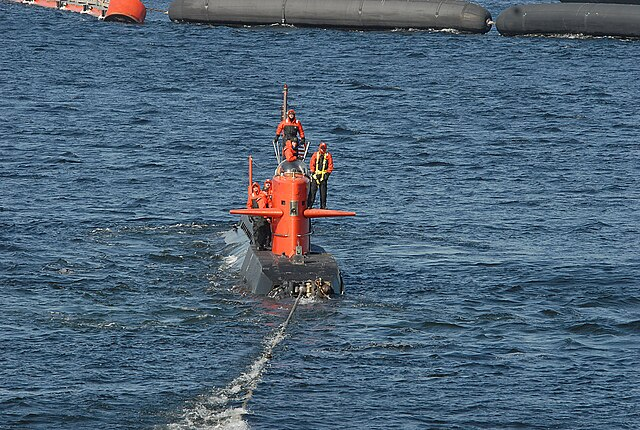
A US submarine has sunk an Iranian warship with a torpedo in international waters off the coast of Sri Lanka. Defense Secretary Pete Hegseth confirmed the strike at a Pentagon briefing on Wednesday, calling it the first such attack on an enemy vessel since World War II.
What Happened
The Iranian frigate IRIS Dena was located approximately 40 nautical miles off Galle in southern Sri Lanka when it sent out a distress call between 6am and 7am local time on Wednesday. The ship had around 180 crew members on board. Sri Lanka’s deputy foreign minister told local television that at least 80 people were killed in the strike. Sri Lanka’s government confirmed it recovered several bodies and rescued 32 wounded sailors after the ship sank just outside the country’s territorial waters. Search and rescue operations are ongoing for the remaining crew members.
The IRIS Dena had been returning from participating in the 2026 International Fleet Review held last month in Visakhapatnam, India. A Sri Lankan navy spokesperson said no other ship or aircraft was observed in the area at the time of the sinking.
Broader Context
The sinking occurred on the fifth day of US and Israeli air strikes on Iran, which began after the killing of Supreme Leader Ali Khamenei. The strikes have killed nearly 800 people in Iran, including dozens of schoolgirls. Iran has responded with drone and missile attacks on Israel and US-linked assets across Gulf countries. Six US service members have been killed and many others wounded since the operation began.
Sri Lanka’s Foreign Minister Vijitha Herath told parliament that the navy received a distress signal and dispatched ships and air force planes on a rescue mission. Iranian embassy officials in Colombo have sent officers to Galle to speak with survivors.
Why This Matters to You
This is a historic moment. The last time the US sank an enemy warship with a torpedo was during World War II. The fact that this occurred thousands of miles from the main theatre of conflict, in waters off Sri Lanka, signals that this war is no longer confined to the Middle East. It is spreading into international waters and drawing in neutral nations.
For Sri Lanka, a country that has no part in this conflict, the sudden arrival of a war zone on its doorstep creates serious diplomatic and humanitarian challenges. For the wider world, a conflict that now spans from the Persian Gulf to the Indian Ocean raises urgent questions about global shipping safety, insurance costs and supply chain disruption.
It is worth thinking about: What are the legal implications of sinking a warship in international waters thousands of miles from the declared conflict zone? How does this affect neutral countries like Sri Lanka that are now caught in the middle? And with the conflict expanding geographically on its fifth day, where does this end?

