
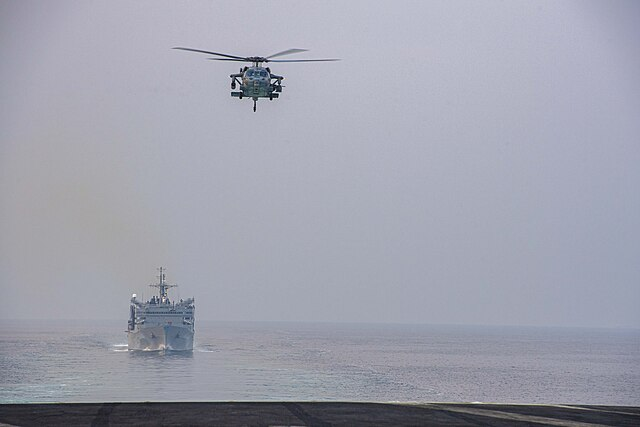
The US military destroyed 16 Iranian mine-laying vessels near the Strait of Hormuz on Tuesday in a preemptive strike based on intelligence that Iran was preparing to deploy mines in the critical waterway. US Central Command confirmed the action on X, releasing video of the strikes. The move escalates the naval dimension of the Iran war on its twelfth day and comes as the Strait remains effectively closed to commercial shipping.
The Mine Threat
CNN reported Tuesday that Iran had already begun laying mines in the Strait, citing unnamed sources familiar with US intelligence. A senior US official told Axios the strike on the vessels was preemptive and based on intelligence about Iran’s operational plans. The sources said only a few dozen mines had been laid so far, but Iran retains more than 80% of its small boats and minelayers and could feasibly place hundreds more in the waterway. The Robert Strauss Center for International Security and Law noted mines would be “beneficial” for Iran either for direct damage or as a deterrent, channeling ships into a predetermined lane. (Axios, CNN, Naval News)
The vessels destroyed included a Shahid Soleimani-class catamaran corvette, one of Iran’s most advanced surface combatants equipped with vertical launch missile systems, as well as small fast boats fitted with missiles, a Khadir-class submarine and small intercept boats. Naval analyst Tayfun Ozberk noted that the loss of a warship carries outsized psychological impact beyond its material value, comparing it to the effect on the Black Sea conflict when Russia lost the cruiser Moskva. (Naval News)
Despite the strikes, the US Navy is still refusing near-daily requests from the shipping industry to escort tankers through the Strait, with officials saying the missile and drone threat from Iran remains too high. Since Friday, only seven vessels have passed through the waterway according to Kpler data. The US had decommissioned four Avenger-class minesweepers stationed in Bahrain in late 2025, leaving a gap in dedicated mine-clearance capacity. (CNBC, Fox News)
Trump and Congress Divided on Nation-Building
A significant internal disagreement emerged Tuesday between Trump and Republican congressional leadership. The day before, Trump had described the Iran operation as “the beginning of building a new country.” At the House GOP retreat in Florida, Speaker Mike Johnson pushed back firmly, telling reporters “it is not America’s responsibility to nation-build in Iran.” Other top Republicans at the retreat echoed that position. The disconnect between Trump’s expansive vision and Congress’s appetite for a limited operation is growing more visible as the war extends into its second week. (NBC News, Fox News)
School Strike Accountability
Evidence is mounting that the US was responsible for a strike on an elementary school in southern Iran on the first day of the war that killed more than 160 people, including children. Images have now emerged showing fragments of American-made missiles at the site. Republican Senator John Kennedy became the first GOP lawmaker to publicly acknowledge US culpability. “It was terrible. We made a mistake,” Kennedy told reporters. “Other countries do that sort of thing intentionally, like Russia. We would never do that intentionally. I’m just so sorry it happened.” The Pentagon says an investigation is ongoing. (Times of Israel, NBC News)
Other Key Developments
Three merchant ships were attacked in the Gulf by unknown projectiles on Wednesday, raising the total number of commercial vessels struck to 14 since the war began. The ships carried flags from Thailand, Japan and the Marshall Islands. Two drones fell near Dubai International Airport, injuring four people, though air traffic continued as normal. Saudi Arabia intercepted six ballistic missiles launched toward Prince Sultan Air Base and destroyed drones targeting its eastern region. Kuwait shot down eight Iranian drones early Wednesday. Israel struck multiple positions in Tehran and Lebanon, with Netanyahu saying his country would fight “as long as it takes.” Lebanon’s health ministry said at least 397 people have now been killed there, with 667,000 internally displaced. (NPR, Euronews)
Iran’s women’s soccer team, which had been competing in Australia when the war broke out, continued to make headlines. Seven team members have now been granted humanitarian visas by Australia after refusing to sing Iran’s national anthem during a match. Australia’s Home Affairs Minister said they “will be safe here.” (NPR)
Why This Matters to You
Mining a major international shipping lane is not just a military act. It is an economic one affecting every country that depends on Gulf energy. Even a few dozen mines in the Strait of Hormuz are enough to keep commercial insurers and shipping companies from sending vessels through, as the psychological effect outweighs the statistical risk. With only seven ships passing through since Friday and the US Navy still declining to escort tankers, the energy disruption is far from over.
The divide between Trump and congressional Republicans on nation-building is also significant. If Trump envisions a prolonged presence to reshape Iran’s government while Congress is not prepared to authorize one, the constitutional and political tensions over this war will only grow. It is worth thinking about: With Iran still retaining 80% of its minelaying capacity, how effectively does destroying 16 vessels actually reduce the threat? If the US is responsible for the school strike that killed more than 160 civilians, what accountability measures exist under US and international law? And with Speaker Johnson publicly contradicting Trump’s nation-building language, who is actually defining the US mission in Iran right now?
-Elijah Iraheta, Editor in Chief, ASC News

