
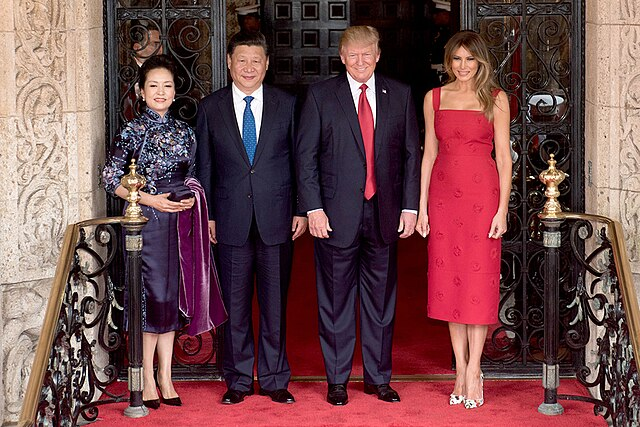
The Trump administration signaled Monday that the president’s planned state visit to China could be postponed, as the Iran war enters its third week and Trump publicly pressures Beijing to help reopen the Strait of Hormuz. Treasury Secretary Scott Bessent, speaking from Paris where he met Monday with Chinese Vice Premier He Lifeng, said any delay would be for logistical reasons rather than a direct demand on China over the strait.
What Bessent Said
Bessent was careful to separate the two issues publicly. “If the meetings are delayed, it wouldn’t be delayed because the president demanded that China police the Strait of Hormuz,” he told CNBC. “If the meeting, for some reason, is rescheduled, it would be rescheduled because of logistics.” He said Trump may simply choose to remain in Washington as commander in chief while the war is being prosecuted. White House Press Secretary Karoline Leavitt told reporters separately Monday morning that a delay is “quite possible” and said Trump’s top priority was ensuring the continued success of the Iran operation. (CNBC, ABC News)
Bessent’s framing directly walked back Trump’s own comments from Sunday. In a Financial Times interview, Trump said he wanted to know whether China would help with a Hormuz coalition before he traveled to Beijing, adding “we may delay” the trip. He also told reporters aboard Air Force One that China sources approximately 90% of its oil through the Strait, framing Beijing’s cooperation as a matter of self-interest. (Financial Times, Spectrum News)
What China Said
Beijing has not officially confirmed the March 31 to April 2 dates for the summit, which is standard practice for China, which typically announces such plans closer to their start. Chinese Foreign Ministry spokesperson Lin Jian said head-of-state diplomacy “plays an irreplaceable strategic guiding role in China-US relations” and confirmed the two sides were in communication. He did not respond directly to Trump’s call for outside help in the Strait, but repeated China’s call for an immediate end to military action. “China once again calls on all parties to stop military actions immediately,” Lin said. China recently lowered its 2026 growth target to 4.5 to 5%, its slowest projected growth since 1991, meaning prolonged Hormuz disruption carries real economic consequences for Beijing as well. (ABC News, Spectrum News)
The Broader Stakes
Bessent acknowledged that between 10 and 14 million barrels of daily oil supply have been cut off globally due to the Hormuz closure but said some oil tankers, including Indian and Iranian vessels, are getting through with US Navy permission. He said oil would be “much lower” than $80 a barrel within a few months and dismissed concerns about food shortages and a new inflation crisis as overdone. He said the Paris talks went well and that both sides would release a statement reaffirming stability in the relationship between the world’s two largest economies. (CNN)
The Trump-Xi summit would be the first visit by a US president to China since Trump’s 2017 trip during his first term. The two leaders last met in Busan, South Korea in October 2025, where they agreed to a one-year trade truce that pulled tariffs back from triple-digit levels. The US also opened new trade investigations last week against China and more than a dozen other countries under Section 301 of the Trade Act of 1974, adding further friction to the relationship ahead of the summit. Trump warned NATO separately Sunday that it faces a “very bad future” if allies do not send warships to help open the Strait. He said the US had spoken to approximately seven nations about offering military support. None has formally committed. Israel separately announced Monday it had launched limited and targeted ground operations against Hezbollah strongholds in southern Lebanon. (Reuters, CNN, ABC News)
Why This Matters to You
The Trump-Xi summit was already one of the most consequential diplomatic meetings on the 2026 calendar. A face-to-face between the leaders of the world’s two largest economies, coming off a year of tariff battles and chip export restrictions, carries enormous weight for global trade, technology supply chains and financial markets. A postponement does not cancel that agenda. It delays it at a moment when clarity on trade policy is exactly what businesses and investors are looking for.
For everyday Americans, the connection is direct. The Iran war is already raising prices at the pump and at the grocery store. The trade relationship with China affects the price of electronics, clothing, household goods and almost everything manufactured at scale. Having both of those pressure points unresolved simultaneously is a significant economic risk heading into a midterm election year. It is worth thinking about: Is the possibility of delaying the summit a genuine logistical concern or a form of leverage on Beijing over the Strait? If China does not help reopen the Strait, what is the actual consequence given that the US needs China’s cooperation on trade at the same time? And with Israel now launching ground operations in Lebanon on the same day the summit question arose, how many simultaneous crises can US foreign policy manage effectively at once?
-Elijah Iraheta, Editor in Chief, ASC News

