
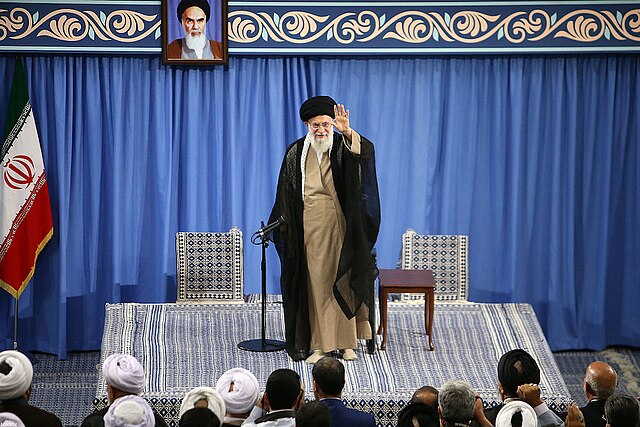
Iran has a new supreme leader. The identity, however, has not yet been announced. The country’s 88-member Assembly of Experts confirmed Sunday it had reached a majority decision on who will succeed Ayatollah Ali Khamenei, who was killed in a US-Israeli strike on Tehran on February 28. The vote happened as the war entered its ninth day with no sign of de-escalation.
The Decision
Assembly member Mohsen Heydari confirmed Sunday that “the most suitable candidate, approved by the majority of the Assembly of Experts, has been determined.” Senior cleric Ahmad Alamolhoda went further, saying all rumors that a decision had not yet been made were “completely false” and that the vote had already taken place. He added that under Iran’s constitution, no member of the assembly can change their vote once a decision is finalized. The formal announcement depends on Ayatollah Hashem Hosseini Bushehri, the official designated to communicate the assembly’s decision to the public. (Anadolu Agency, Mehr News Agency)
The selection process was anything but normal. Israel bombed the Assembly of Experts’ building in Qom on March 3 during a session convened specifically to vote on a successor, forcing the assembly to move its deliberations online. IRGC commanders reportedly made repeated phone calls and held in-person meetings with assembly members in the hours before the vote, pressuring them to select a specific candidate. (Iran International, Jerusalem Post)
Who It Could Be
The name has not been officially released, but multiple signals point strongly toward Mojtaba Khamenei, 56, the second son of the late supreme leader. Iran International reported that IRGC commanders pressured the assembly specifically to elect Mojtaba. Assembly member Heidari Alekasir offered an indirect but telling clue, saying the selected candidate was someone “the Great Satan had mentioned by name” and that “someone opposed by the enemy is more likely to benefit Iran and Islam.” Trump had previously said Mojtaba’s appointment would be unacceptable. (Iran International, Al Jazeera)
A father-to-son succession would be historically unusual and controversial. Iran was born from the overthrow of a monarchy in 1979 and a dynastic transfer of power cuts against the republic’s founding principles. Critics have also noted that Mojtaba lacks the religious rank typically expected of a supreme leader. (The Conversation)
Israel’s Warning
Israel has made its position clear. The Israeli military posted a warning in Farsi on X stating it would “continue pursuing every successor of Iran’s late supreme leader” and would target anyone involved in appointing a successor. Israel’s defense minister previously said any chosen successor would be killed. (Al Jazeera)
Fighting Continues on Day Nine
The announcement came as some of the most intense strikes of the war hit Iranian infrastructure. Overnight, US and Israeli forces struck five oil facilities around Tehran. Fuel depots on the outskirts of the capital were set ablaze. Explosions in the nearby city of Karaj left the area blanketed in smoke. Iran has now cut fuel quotas in Tehran following the destruction of oil storage facilities. More than 1,200 people have been killed and over 10,000 injured in Iran since strikes began on February 28, according to Iranian official data. (Anadolu Agency, The Guardian)
Gulf states were also struck again on Sunday. Saudi Arabia intercepted 15 drones. Bahrain reported material damage to an important desalination plant. Qatar, the UAE and Kuwait also reported attacks. The strikes directly contradict a pledge made Saturday by Iranian President Masoud Pezeshkian, who had apologized to Gulf neighbors and suggested attacks on them would stop. Analysts said the disconnect exposed rare and serious rifts within Iran’s ruling elite, with more conservative factions appearing to override Pezeshkian entirely. (The Guardian)
Russia has reportedly been providing Iran with intelligence to help target US military assets in the region, according to reporting by the Washington Post and Fox News, though this has not been independently confirmed by all outlets.
Why This Matters to You
This is one of the most consequential leadership transitions in the modern Middle East. The supreme leader of Iran controls the military, the judiciary, foreign policy and the nuclear program. Whoever takes that role next will determine whether Iran seeks to end this war or escalate it further.
The fact that the name is being withheld while active war is ongoing adds a dangerous layer of uncertainty. No one outside Iran’s inner circle knows who is now in charge of one of the region’s most powerful militaries. And with Israel already promising to kill any successor, the new leader faces an immediate threat to their own life from the moment their name is announced. It is worth thinking about: If Mojtaba Khamenei does become supreme leader under IRGC pressure, does that mean the Revolutionary Guard now effectively controls Iran? With Pezeshkian’s authority clearly undermined by his own military, what role does Iran’s civilian government actually play? And with Russia reportedly feeding intelligence to Iran, is this conflict drawing closer to a direct confrontation between major world powers?3
-Elijah Iraheta, Editor in Chief, ASC News

