
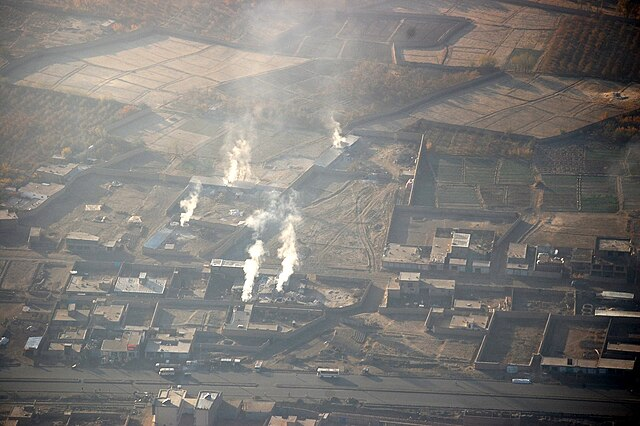
Pakistan has declared it is in open war with Afghanistan’s Taliban government following a significant escalation in cross-border fighting. Pakistan’s Defence Minister Khawaja Asif made the declaration on Friday, stating that Islamabad’s patience has reached its limit and that its armed forces are giving a decisive response. Pakistan has confirmed strikes on Kabul, Kandahar and Paktika inside Afghanistan, with explosions reported in the Afghan capital.
The declaration came hours after Taliban spokesperson Zabihullah Mujahid announced that Afghanistan was carrying out large-scale offensive operations against Pakistani military positions along the Durand Line, the contested border separating the two countries. The Taliban said its offensive was a response to earlier Pakistani air strikes this week.
The international reaction has been swift. The UN Secretary-General Antonio Guterres expressed deep concern and urged both sides to uphold their obligations under international humanitarian law, with a particular emphasis on protecting civilians. Iran’s Foreign Minister Abbas Araghchi called for dialogue and restraint during the holy month of Ramadan, offering Iran’s assistance to facilitate talks. Russia urged an immediate halt to cross-border attacks and offered to mediate. China said it is deeply concerned and is already mediating through its own channels. Turkey’s top diplomat held separate calls with foreign ministers from Pakistan, Afghanistan, Qatar and Saudi Arabia. Qatar is actively working to facilitate de-escalation, and the UK’s Foreign Secretary Yvette Cooper called on both sides to take immediate steps to reduce tensions and protect civilians.
India condemned Pakistan’s air strikes, with its Foreign Ministry calling them another attempt by Pakistan to externalise its own internal failures. India has been strengthening ties with the Taliban recently, and Pakistan has accused India of funding destabilising groups inside both Afghanistan and Pakistan, a claim India denies.
Former Afghan President Hamid Karzai called on Afghans to defend their homeland with unity, and urged Pakistan to choose the path of good neighbourliness rather than aggression.
Why This Matters to You:
This conflict has implications far beyond the Pakistan-Afghanistan border. Both countries are nuclear-armed, and an open war between them in an already volatile region raises serious concerns for global stability. A prolonged conflict could trigger a major humanitarian crisis, displace millions of civilians and destabilise supply chains and energy markets in ways that ripple across the world.
For viewers in the US and UK, this matters because both governments have deep strategic interests in South Asia and are already being called upon to respond diplomatically. It also raises important questions worth thinking about: How does instability in this region affect the global fight against terrorism? What responsibility do countries like the US, UK and China have in preventing this from escalating further? And with so many nations now involved diplomatically, is there a realistic path to de-escalation before this becomes a broader regional war?

