
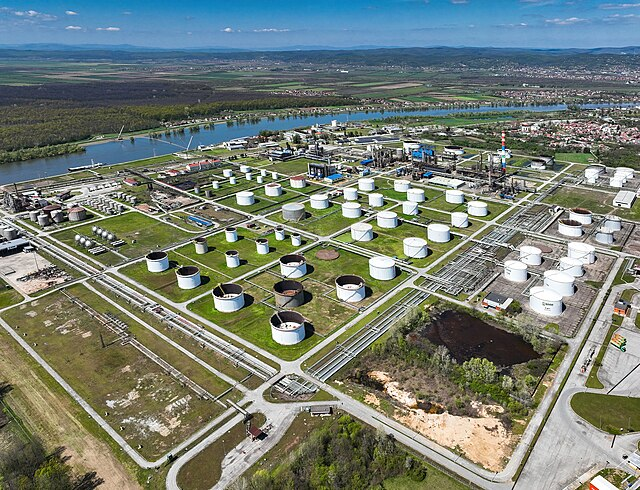
The International Energy Agency made history on Wednesday, announcing the largest emergency oil reserve release in its 52-year history. The 32 member nations unanimously agreed to release 400 million barrels of oil from their strategic stockpiles to counter the supply disruption caused by the Iran war and the near-total closure of the Strait of Hormuz. The decision more than doubles the previous record of 182.7 million barrels released following Russia’s invasion of Ukraine in 2022. Despite the announcement, oil prices rose following the news, signaling deep market skepticism about whether reserves alone can solve the crisis.
The Scale of the Problem
The IEA release is large, but the disruption it is trying to address is larger. Roughly 20 million barrels of crude oil and refined products normally pass through the Strait of Hormuz every day, amounting to approximately 25% of the world’s seaborne oil trade. Those flows have now all but stopped. Export volumes of crude and refined products from the Gulf region are currently at less than 10% of pre-war levels. Global energy supply has been reduced by approximately 20%, with natural gas markets particularly strained. Qatar and the UAE, two of the world’s largest LNG exporters, have been targeted by Iranian strikes, and IEA executive director Fatih Birol said there are “few options to replace the missing LNG cargoes.” (IEA, PBS NewsHour, Al Jazeera)
Why Oil Prices Rose Anyway
Following the IEA announcement, US crude oil prices briefly fell before climbing back above $88 per barrel by midday. The market moves signal real concerns about a more protracted conflict, despite Trump’s assurances that the war would end soon. The IEA did not specify a timeline for when releases would begin or at what pace barrels would reach the market. Traders and analysts estimated the release rate at between 1.2 million and 4 million barrels per day. Even at the maximum drawdown rate, that would cover only a portion of the estimated 11 to 16 million barrels of daily Gulf supply being lost. Macquarie investment firm noted bluntly that “crude oil will continue to trade like a meme stock until the solution is peace.” (NBC News, Rigzone)
Who Is Contributing What
The US holds approximately 415 million barrels in its Strategic Petroleum Reserve, roughly 58% of total capacity, and is expected to be the largest single contributor. It takes 13 days for SPR oil to reach the open market after a presidential decision, with additional shipping time before volumes reach end consumers. The UK pledged 13.5 million barrels. South Korea pledged 22.46 million barrels. Germany was asked to release approximately 19.7 million barrels and said first deliveries would arrive within days. France’s contribution amounts to 14.5 million barrels. G7 nations together account for 70% of the total 400 million barrels. Austria announced it would also release reserves and extend its national strategic gas reserve. Japan said it would begin releasing oil starting Monday. (Al Jazeera, PBS NewsHour, Fortune)
A potentially significant wildcard is China, which is not an IEA member. Analysts estimate China holds between 1.1 and 1.4 billion barrels across strategic and commercial stockpiles, but the government does not publish official data. Whether Beijing opts to release oil could be a major factor in whether prices stabilize. (CBS News)
The G7 Dimension
G7 leaders, including Trump, met by videoconference Wednesday. French President Emmanuel Macron described the 400 million barrel release as the equivalent of 20 days of the volume normally exported through the Strait of Hormuz. US Interior Secretary Doug Burgum told Fox News he welcomed the release but described the situation as a transit problem that is temporary, stopping short of calling it an energy shortage. (PBS NewsHour, Al Jazeera)
The Bottom Line
IEA executive director Fatih Birol was direct: “The most important thing for a return to stable flows of oil and gas is the resumption of transit through the Strait of Hormuz.” No reserve release can fully substitute for the roughly 20 million barrels a day that the Strait normally carries. The IEA was built for moments like this, but the scale of the current disruption is testing its capacity to respond.
Why This Matters to You
The 400 million barrel release is the most aggressive coordinated global energy policy response since the 2008 financial crisis. But it comes with a delay. US Strategic Petroleum Reserve oil takes 13 days to reach the market after a presidential order, plus additional shipping time. That means relief at the pump, if it comes at all, is at minimum two weeks away.
For everyday consumers already paying a national average of $3.57 per gallon, that is a long time to wait. And with analysts estimating 11 to 16 million barrels per day of Gulf supply being lost while the maximum IEA release rate covers only a fraction of that gap, the reserves are a bridge rather than a solution. It is worth thinking about: If 400 million barrels is only the equivalent of 20 days of Strait of Hormuz exports, what happens to energy markets if the war extends beyond that window? With China holding up to 1.4 billion barrels in reserves and choosing not to release them, is Beijing benefiting economically from a disruption that is hurting its rivals? And with oil prices rising even after the largest reserve release in history, how much confidence should consumers have that this action will meaningfully reduce what they pay at the pump?
-Elijah Iraheta, Editor in Chief, ASC News

