
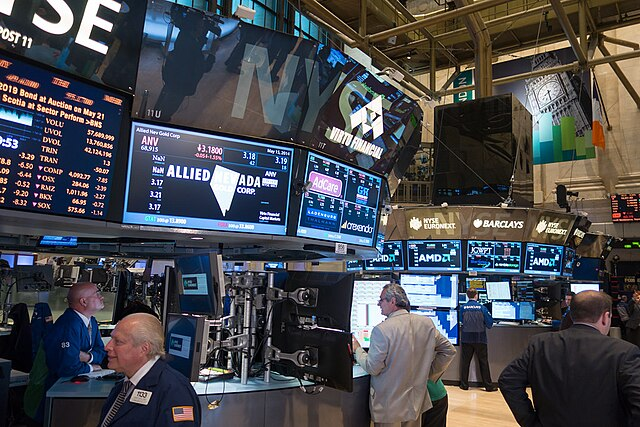
US stocks rebounded on Wednesday, building on late momentum from the previous session. Investors found reasons for cautious optimism amid ongoing developments in the US-Israeli war on Iran. The Dow Jones gained 301 points, or 0.6%. The S&P 500 rose 0.8% and the Nasdaq climbed 1.4%. European markets also staged a recovery.
Strong Economic Data Lifts Sentiment
Two positive economic releases helped boost confidence on Wednesday. ADP reported that private sector companies added more jobs than expected in February. Additionally, the US nonmanufacturing sector posted better-than-expected growth last month, with easing inflation pressures adding to the positive tone.
Oil Prices Start to Cool
The recent surge in oil prices showed signs of losing momentum on Wednesday. Brent crude futures and West Texas Intermediate both edged marginally lower. Treasury Secretary Scott Bessent told CNBC that the US would be making a series of announcements to support the flow of oil through the Persian Gulf.
This follows President Trump’s announcement that the US would provide risk insurance to all maritime trade through the Gulf. The goal is to get tankers moving again through the Strait of Hormuz, which came to a halt after an Iranian Revolutionary Guard commander threatened to set fire to any ships attempting the route.
Tariff Update
Bessent also confirmed on Wednesday that Trump’s 15% global tariff, announced late last month, will be implemented this week. However, he added that he believes US tariff rates will return to pre-Supreme Court ruling levels within five months.
Analysts Remain Cautious
Despite Wednesday’s gains, analysts urged caution. Deutsche Bank’s Jim Reid noted that market sentiment is shifting on an hourly basis with no signs of de-escalation on either side of the Iran conflict. However, some longer-term opportunities may be emerging, particularly if energy prices stabilize in the days and weeks ahead, according to Edward Jones senior economist James McCann.
Why This Matters to You
Wednesday’s market recovery is encouraging, but the underlying risks have not gone away. Oil prices remain elevated. The Strait of Hormuz is still disrupted. And Trump’s 15% global tariff is now being implemented this week, which will affect the price of imported goods across the board.
For everyday consumers, higher tariffs mean higher prices on a wide range of products from electronics to clothing to food. Combined with elevated energy costs, the pressure on household budgets could intensify in the weeks ahead. It is worth thinking about: Will the US government’s risk insurance plan actually convince tankers to move through the Strait of Hormuz while an active military conflict is ongoing? If tariffs return to pre-ruling levels within five months as Bessent suggests, what happens to prices in the meantime? And with markets swinging hourly on headlines, how should everyday investors be thinking about their portfolios right now?

