
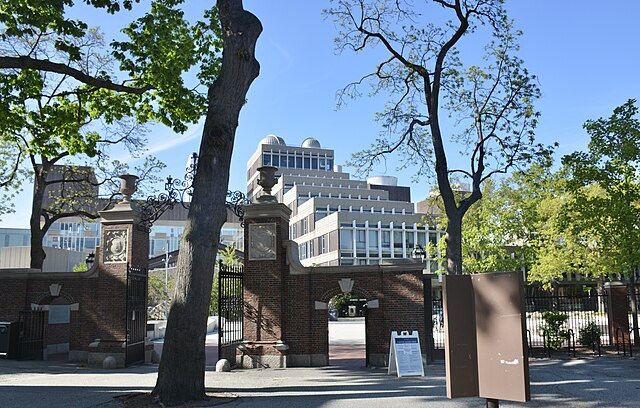
The Justice Department filed a 44-page federal lawsuit against Harvard University on Friday, alleging the school violated Title VI of the Civil Rights Act by failing to protect Jewish and Israeli students from harassment and discrimination in the years following the October 7, 2023 Hamas attacks. The lawsuit, filed in federal district court in Massachusetts, asks a judge to freeze more than $2.6 billion in existing federal grants and seek repayment of all grant payments made during the period of alleged noncompliance. Harvard called the suit pretextual and retaliatory.
What the Lawsuit Alleges
The Justice Department alleged that Harvard defied federal law repeatedly by discriminating against Jewish and Israeli students without remorse. Those students, government lawyers said, were subjected to severe, pervasive and objectively offensive harassment on campus, including during protests following October 7. Specific examples cited in the complaint include students being spat on for wearing a yarmulke, stalked on campus and subjected to calls of “Heil Hitler.” The administration is asking the court to declare Harvard in breach of its federal contract, appoint an independent outside monitor and recover all grant payments made during the alleged period of noncompliance.
The Trump administration opened an investigation into Harvard’s compliance with Title VI last April and determined in June that the school had violated that law. It warned that failure to enact certain changes would lead to a loss of federal financial resources.
Harvard’s Response
Harvard said it has taken substantive and proactive steps to address antisemitism and actively enforces anti-harassment policies. In a statement, a university spokesperson said the lawsuit “represents yet another pretextual and retaliatory action by the administration for refusing to turn over control of Harvard to the federal government.” Harvard has previously filed its own lawsuits against the administration over funding freezes, and a federal judge ruled in September that the government violated the university’s First Amendment rights when it halted nearly $2 billion in federal grants, calling the antisemitism argument a smokescreen. (CBS News, CNN)
The Escalating Conflict
What began as an investigation into campus antisemitism escalated into an all-out feud as the Trump administration slashed more than $2.6 billion in research funding, ended federal contracts and attempted to block Harvard from hosting international students. In a pair of lawsuits, Harvard said it was being unfairly penalized for refusing to adopt the administration’s views.
Settlement negotiations have broken down repeatedly. The two sides were reportedly close to a deal requiring Harvard to pay $500 million to regain access to federal funding. Trump later raised that figure to $1 billion. An administration official told CNN negotiators “were close and they ghosted,” saying there has been no communication and Harvard has been “dragging their feet.” (CNN, AP)
Since Trump took office, several other universities have reached agreements with the White House to restore funding. Columbia University agreed to pay $200 million. Brown University agreed to pay $50 million toward state workforce development groups. Harvard has not settled.
Why This Matters to You
Harvard receives more than $2.6 billion in federal grants, most of it for scientific and medical research. That research produces cancer treatments, vaccines, climate science and public health data that benefits people far beyond the Cambridge campus. Freezing or clawing back those grants does not just affect Harvard. It affects the laboratories, the researchers and the ongoing studies that depend on that funding.
At a broader level, this lawsuit is the latest episode in a sustained campaign by the federal government to use funding leverage to reshape how one of the world’s most prominent universities operates. Whether the underlying antisemitism allegations are legitimate concerns or, as Harvard argues, a smokescreen for a broader political conflict is a question the courts will ultimately have to decide. It is worth thinking about: If a federal judge previously ruled that the funding freeze violated Harvard’s First Amendment rights, what legal basis does this new lawsuit stand on? With Columbia and Brown settling and Harvard refusing, is Harvard’s resistance a principled stand for academic independence or a strategic miscalculation? And with $2.6 billion in research grants at stake, what happens to ongoing scientific studies if those funds are frozen again while this lawsuit works through the courts?
-Elijah Iraheta, Editor in Chief, ASC News

