
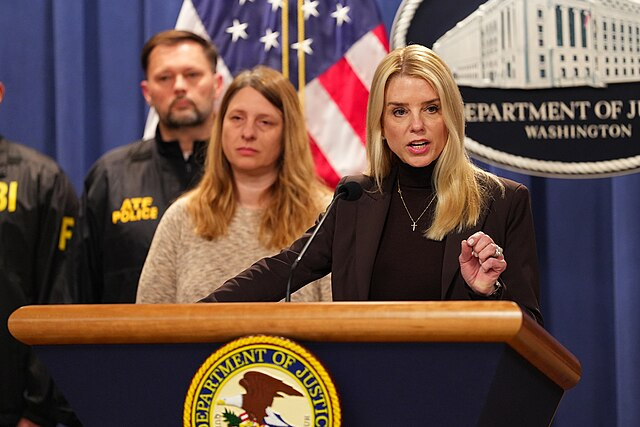
The Republican-led House Oversight Committee voted 24-19 on Wednesday to subpoena Attorney General Pam Bondi, requiring her to testify about her role in the release of the Jeffrey Epstein files. The vote passed with bipartisan support, with Republican Reps. Tim Burchett, Michael Cloud, Lauren Boebert and Scott Perry joining Democrats in backing the subpoena alongside its sponsor, Rep. Nancy Mace.
How It Happened
Mace forced the vote during a committee hearing that had nothing to do with Epstein, making it an unexpected procedural move. Committee Chairman James Comer said he had spoken with Bondi’s chief of staff ahead of the vote and that Bondi had offered to give members a private briefing, a few at a time, rather than formal testimony. That offer was not enough to stop the subpoena from passing.
Why Bondi Is Being Called
Congress passed a law last year requiring the DOJ to publicly release all of its investigative files related to Epstein. However, the releases so far have drawn criticism from lawmakers on both sides of the aisle, with many saying the files were too heavily redacted and that the process lacks transparency. Bondi’s subpoena is the latest step in the committee’s wide-ranging probe into Epstein and his network.
Broader Investigation
The House Oversight Committee has been casting a wide net. On Tuesday, the committee announced that Commerce Secretary Howard Lutnick had agreed to appear before the panel voluntarily. It also issued voluntary testimony requests to seven other individuals. The Epstein investigation has now drawn in figures across government, finance and politics.
Why This Matters to You
The Epstein investigation is ultimately about whether powerful people were protected from accountability by the very institutions meant to enforce the law. The fact that a sitting Attorney General is now being subpoenaed by members of her own party’s committee suggests the concern about transparency is genuine and crosses political lines.
For everyday people, this matters because the DOJ controls what information the public gets access to. If the Epstein files are being released in an overly redacted form, the public may never know the full extent of his network or how it operated. It is worth thinking about: Why would a law requiring full transparency result in files that lawmakers from both parties still consider inadequate? What is the Attorney General’s responsibility to ensure the public gets the information Congress mandated? And with subpoenas now flying in multiple directions, is the Epstein investigation moving toward real accountability or becoming a political battleground that obscures more than it reveals?

