
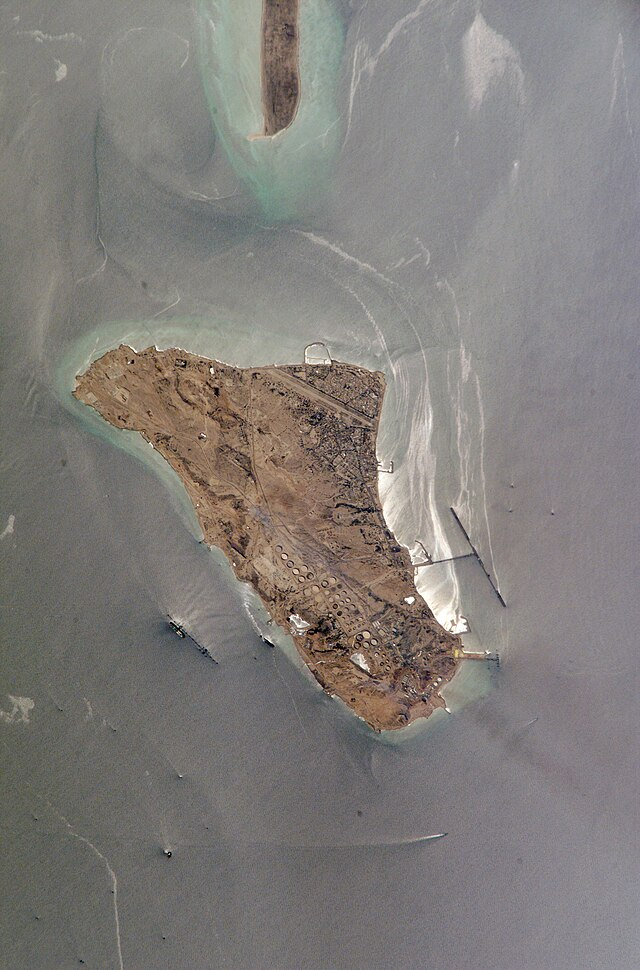
President Trump escalated his rhetoric on Saturday, saying US strikes had “totally demolished” Kharg Island and warning he may hit it again “just for fun.” He also said Iran appears ready to make a deal to end the war but that the terms are not good enough yet. The Iran war has now entered its fifteenth day, with more than 2,000 people killed since strikes began on February 28, most of them in Iran and Lebanon.
Kharg Island and the Ceasefire Signal
In a nearly 30-minute telephone interview with NBC News on Saturday, Trump confirmed US forces struck Kharg Island on Friday. CENTCOM said it hit more than 90 military targets while preserving energy infrastructure. Trump then contradicted that framing, saying the island was “totally demolished” and that “we may hit it a few more times just for fun.” He said he deliberately spared oil pipelines to avoid a reconstruction process that “would take years,” but made clear that restraint is conditional. Iranian Foreign Minister Abbas Araghchi responded on CBS’ Face the Nation, saying “there are people being killed only because President Trump wants to have fun,” and warned that any strike on Iranian energy infrastructure would trigger retaliation against oil and energy facilities throughout the region belonging to companies with American ties. (NBC News, Al Jazeera, CBS News)
Despite Trump’s aggressive language, he also confirmed that Iran has signaled a willingness to negotiate. “Iran wants to make a deal, and I don’t want to make it because the terms aren’t good enough yet,” he said. Three sources familiar with the situation told Reuters that the Trump administration had already rebuffed multiple attempts by Middle Eastern allies to start ceasefire negotiations. Trump said any deal must be “very solid” and indicated Iran abandoning its nuclear ambitions entirely would be a requirement. (Reuters, NBC News)
Questions About Khamenei’s Status
Trump publicly questioned whether Iran’s new supreme leader Mojtaba Khamenei is still alive, saying “I don’t know if he’s even alive. So far, nobody’s been able to show him. I’m hearing he’s not alive, and if he is, he should do something very smart for his country, and that’s surrender.” He also described reports of Khamenei’s death as “a rumor.” Iran’s foreign minister pushed back, saying there is “no problem with the new supreme leader” and that he had sent a message the previous day and would perform his duties. Khamenei has still not appeared on camera. He issued a written statement Thursday that was read aloud by a television presenter. (NBC News, Hawaii Tribune-Herald, Jerusalem Post)
Iran’s Escalating Response
Iran launched missiles and drones overnight targeting Israel, US bases in the region and Gulf states. The IRGC described Sunday’s attacks as the first round of retaliation for strikes on Iranian industrial and civilian areas. Nine ballistic missiles and 33 drones were launched from Iran toward the UAE. A drone struck an oil facility in the UAE’s Fujairah emirate, a major global ship-refueling hub, causing a fire that emergency services were still working to contain by Saturday night. Iran also called on civilians in the UAE to evacuate ports, docks and areas near US facilities. The UAE denied that US strikes on Kharg Island came from its territory, though Iran’s foreign minister insisted the attacks were launched from Ras Al-Khaimah and a site near Dubai. At least 15 people were killed in a US airstrike on a refrigerator and heater factory in Isfahan, according to Iranian state media. (Al Jazeera, Times of Israel, Hawaii Tribune-Herald)
Gas Prices and Diplomatic Context
National average gas prices stood at $3.66 per gallon Saturday, up from $2.94 on March 1 when the war began. Trump dismissed concerns about the impact on the midterm elections, promising prices would fall once the war ends and claiming they would drop to record lows. He said he was “surprised” Iran chose to attack neighboring countries. Trump also confirmed the US eased sanctions on Russian oil as part of efforts to mitigate global energy disruption, drawing criticism from European allies. He separately slammed Ukrainian President Volodymyr Zelenskyy, calling him “far more difficult to deal with” than Putin. (NBC News, Reuters)
France is working to assemble a coalition to secure the Strait of Hormuz once conditions stabilize. Britain is in discussions with allies on maritime security options. Japan is weighing whether it can deploy naval forces under its postwar security framework. Iran’s supreme leader has said the Strait should remain closed. (Reuters)
Why This Matters to You
Trump’s “just for fun” remark is not simply a colorful turn of phrase. It is a signal about how the administration is thinking about escalation. With a ceasefire apparently within diplomatic reach but the terms being rejected, and with the administration already rebuffing mediation attempts from regional allies, the gap between where this war is and where it could end is being held open deliberately.
For everyday people, the consequences are concrete. Gas prices have risen 25% since the war began. Oil facilities in the UAE are on fire. Iran is threatening to destroy American-linked energy infrastructure across the Gulf. And the man nominally in charge of Iran has not been seen in public in two weeks. It is worth thinking about: If Iran is genuinely ready to negotiate but the terms are not good enough yet, what specific demands is the Trump administration making and are they achievable? With Trump openly wondering whether Iran’s supreme leader is even alive, how does the US negotiate a ceasefire with a government whose leadership status is in question? And with gas now at $3.66 and rising, how long before economic pressure forces a change in the administration’s approach?

